Mounded Concrete
Raise the footing above grade and dome the top so water runs away from the post — not into it. Built for Seattle rain, clay, and posts that need to last.
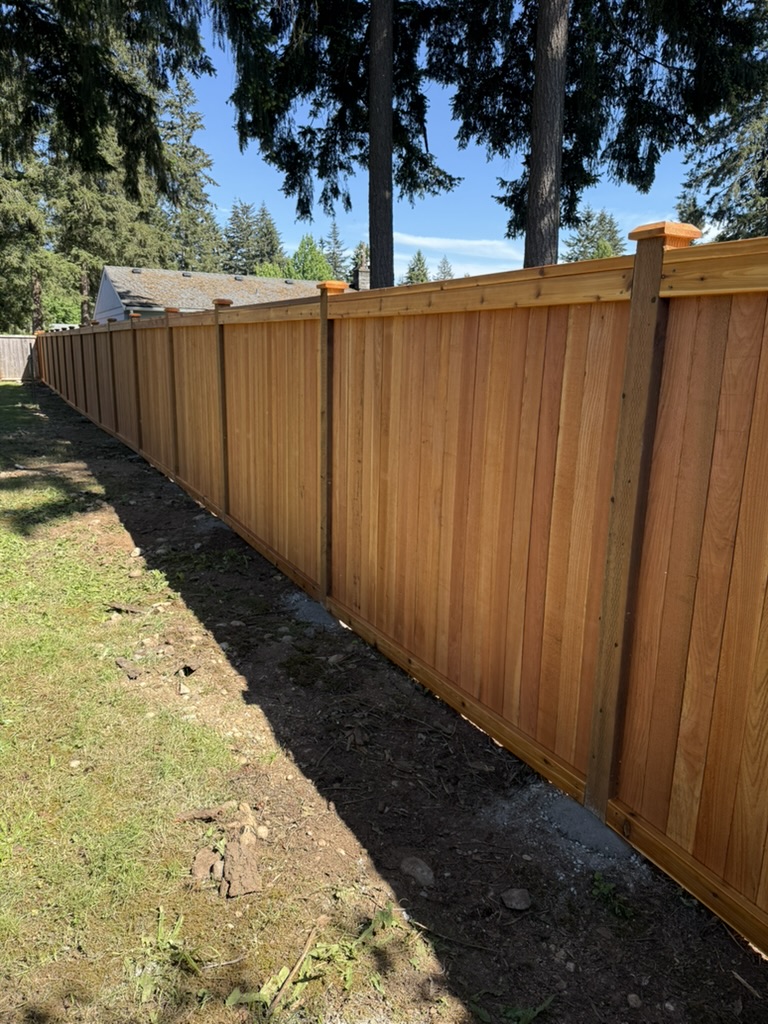
What is mounded concrete?
Most fence posts are set in concrete that gets finished flush with the dirt — or slightly cupped so rain sits against the wood. In Seattle, that standing moisture at grade is where posts start to rot.
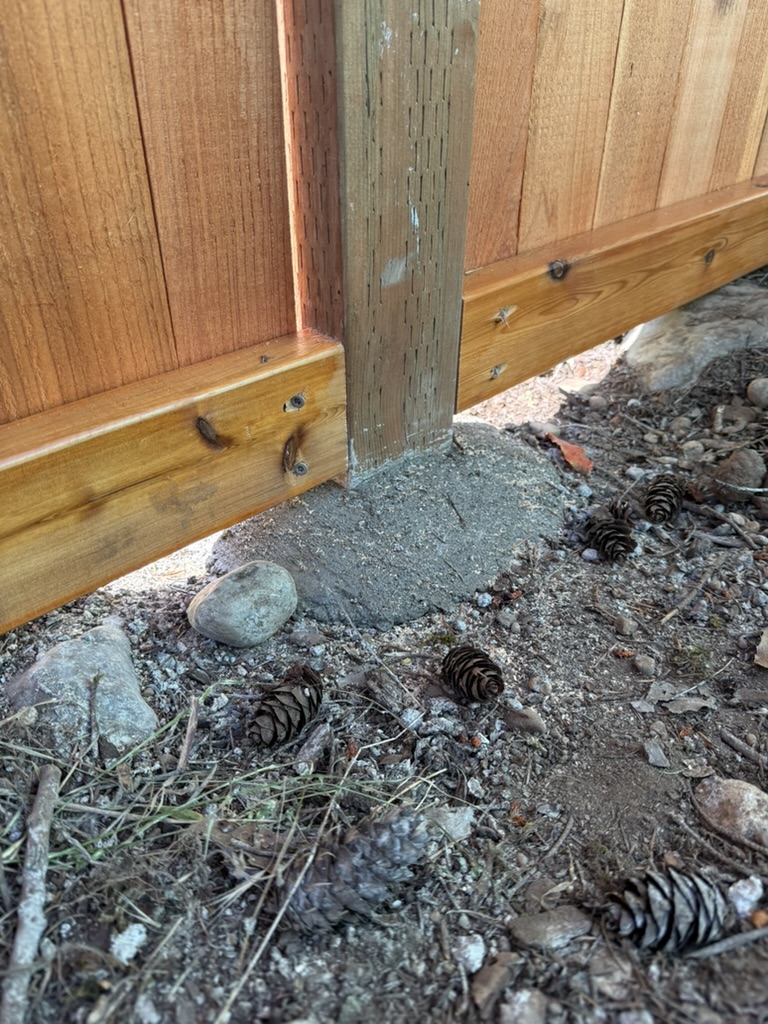
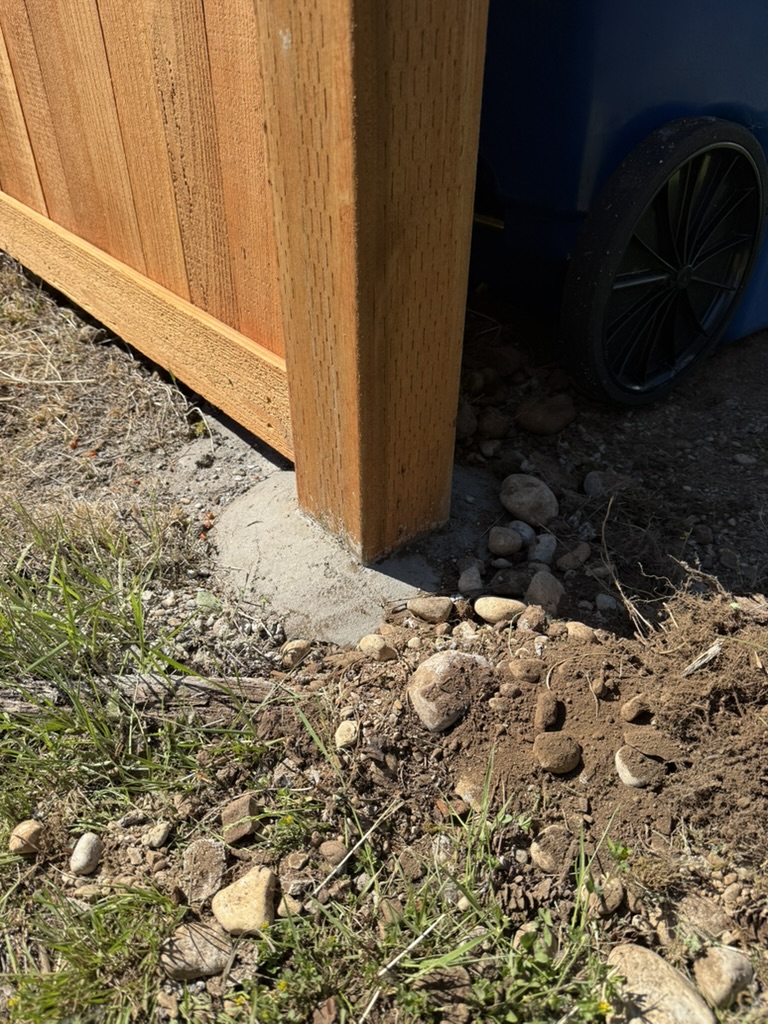
This upgrade raises the footing above grade so you can see an exposed concrete collar around the post. Then we trowel a domed top that sheds water away from the wood instead of letting it pool.
The goal is to keep soil and standing water off the post at ground level, which can help mitigate rot and potentially prolong the life of the post. It is not a substitute for proper hole depth or treated lumber — it is an extra detail that matches how water actually behaves here.
Why it matters
Raised above grade
The footing sits higher than the surrounding soil, so dirt, mulch, and splashback are less likely to bury the post and trap moisture against the wood.
Domed to shed water
A flat or concave pour becomes a birdbath. A crown on the concrete sends rain away from the post instead of holding it at the wood-to-concrete joint.
Built for Puget Sound weather
Wet clay, moss, and long rainy stretches are hard on posts. An exposed, shaped footing is a small extra step with a big payoff at the ground line.
Easy to inspect later
Because the collar stays visible, you can see the post-to-concrete connection on walk-through and years later — instead of guessing under a pile of soil.
How we shape the footing
- 1
Set the post as usual
Posts still go to the depth the job needs, with gravel drainage at the bottom of the hole when site conditions call for it.
- 2
Bring concrete above grade
Instead of hiding the pour under dirt, we leave an exposed collar so the wood is not sitting in a soil bowl at ground level.
- 3
Dome the top
While the mix is workable, we trowel a rounded crown that slopes away from the post on all sides. That is the detail that keeps water from pooling.
- 4
Keep soil and mulch back
After install, landscaping should not be piled against the mound. Burying a good footing undoes the water-shedding shape.
On the job
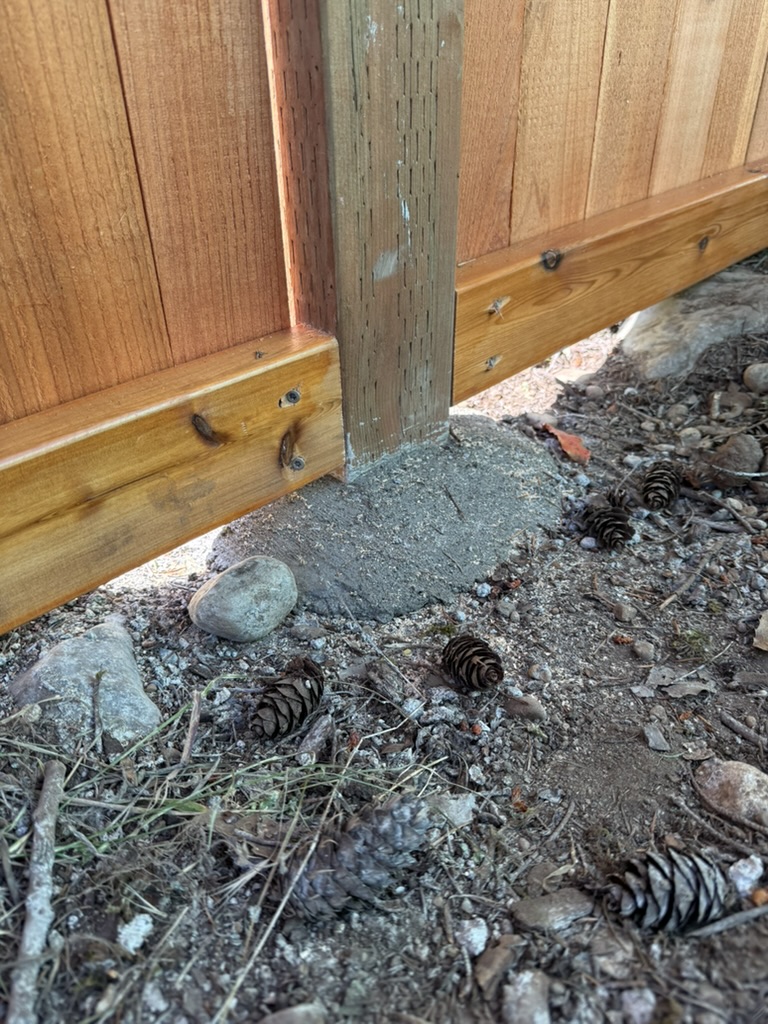
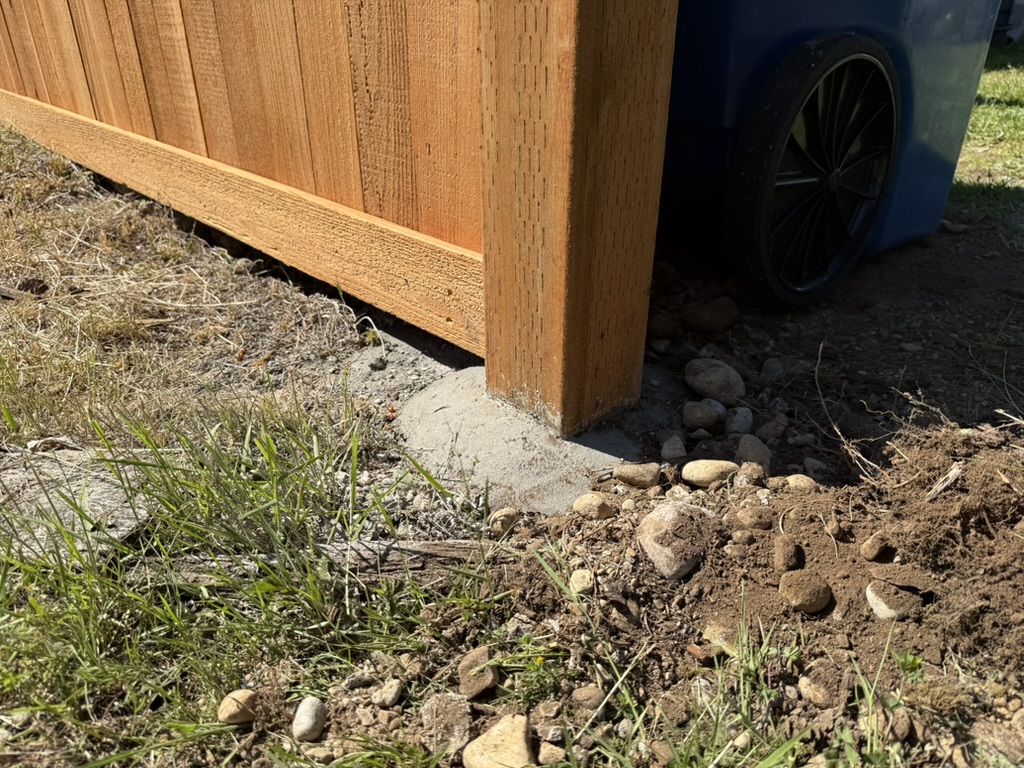
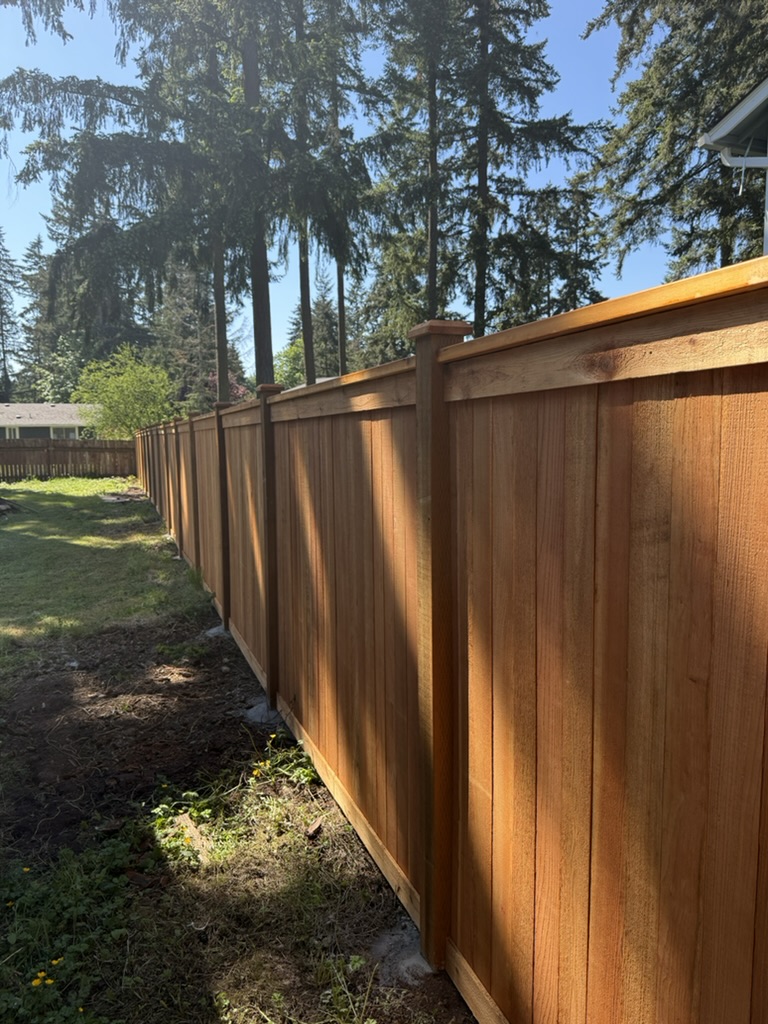
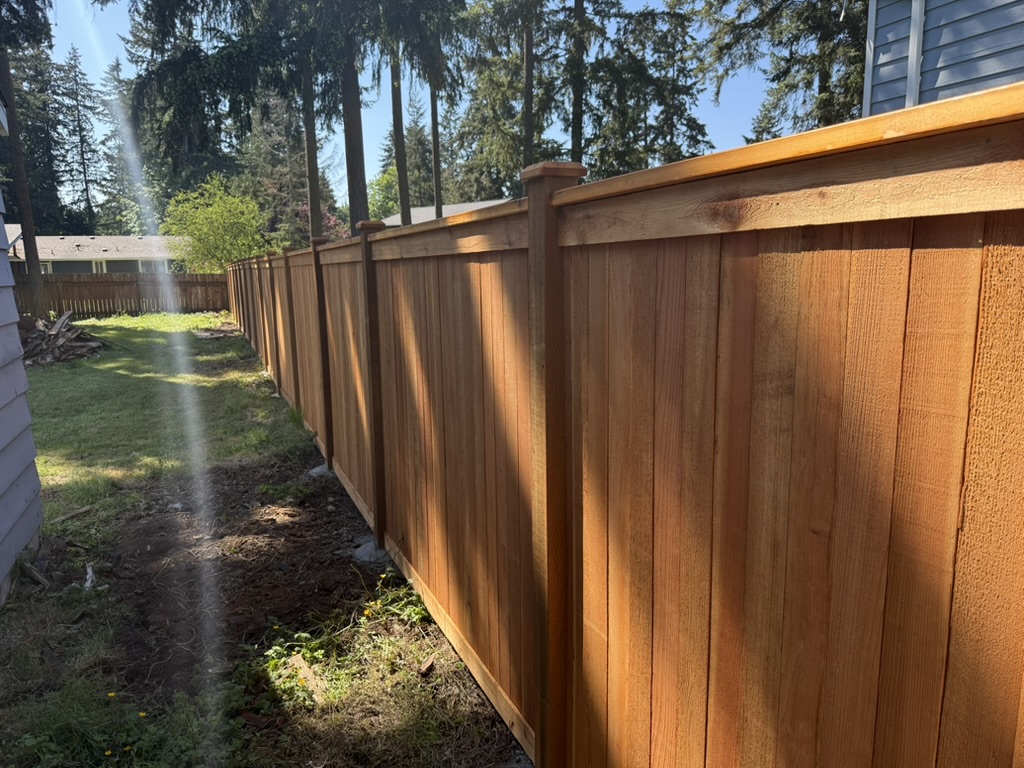
What this upgrade does not do
Mounded concrete helps at the ground line. It does not replace pressure-treated posts, proper hole depth, or keeping fence boards off the soil. Pair it with a rot board if you want extra protection at the bottom of the panels.
Frequently asked questions
Will this stop my posts from ever rotting?
No upgrade can promise that. A domed, above-grade footing is designed to keep water from sitting against the post, which helps mitigate rot. Soil, grade, and landscaping still matter over time.
Can I add this to an existing fence?
This is built with new post setting. On a replacement or new install we can mound every footing. Retrofitting already-buried posts is a different conversation — ask when you request a quote.
Does the concrete stay visible?
Yes. That is the point. You will see a gray collar at each post. If you later add landscaping, keep mulch and soil from burying the mound so it can still shed water.
Add mounded concrete to your fence
Ask a Seattle fence builder to include this upgrade on your next quote. We will confirm it fits your grade, soil, and post layout.